
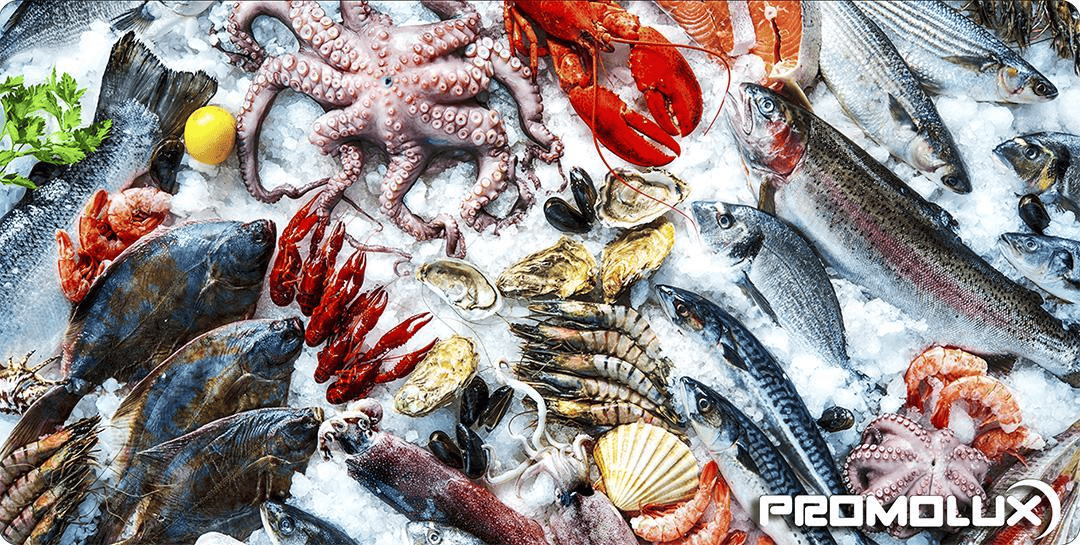
Simple ways to control reflection on wet surfaces and avoid harsh hotspots on ice beds
Seafood displays are among the most challenging in grocery and specialty retail. Fish, shellfish, and other seafood products are highly sensitive to visual cues. Shoppers judge freshness primarily through appearance.clear eyes, shiny skin, and glistening flesh are all key indicators. Improper lighting can create glare on ice beds, highlight water puddles, or cast harsh shadows that make seafood appear dull, lifeless, or even unsafe. Retailers who overlook lighting risk reduced sales, increased shrink, and customer dissatisfaction.
This guide provides practical strategies for seafood display lighting that maintains product appeal, prevents visual distortions, and supports operational efficiency.
Why Lighting Matters in Seafood Displays
Seafood presentation relies on visual freshness. Unlike bakery or produce sections, shoppers cannot rely on smell or touch when making quick purchase decisions. Lighting influences:
●How reflective surfaces such as wet fish skin or ice beds appear
●The visibility of shellfish colors, from the bright red of lobster to the pearly sheen of clams
●Perceived cleanliness of the display, including water droplets and melting ice
Poor lighting can exaggerate flaws, create misleading shadows, or produce hotspots that make ice melt unevenly, shortening shelf life.
Controlling Glare on Wet Surfaces
Glare occurs when light reflects off water or ice directly into the shopper’s eyes. It can obscure product details and reduce purchase confidence. Key strategies include:
Angled Lighting
●Position lights at a shallow angle to avoid reflecting straight into customer sightlines
●Illuminate product surfaces without creating bright spots on water or ice
Diffused Fixtures
●Use diffusers or frosted lenses to scatter light evenly across the case
●Soft illumination highlights product contours without harsh reflections
Adjustable Placement
●Top-mounted fixtures should be complemented by side or rear lighting where appropriate
●Flexibility ensures consistent visual appeal across different case depths and product layouts
Reducing glare enhances shopper experience and maintains perceived freshness.
Avoiding Hotspots on Ice Beds
Excessive light intensity can produce localized heating, melting ice unevenly and affecting seafood quality. Hotspot management strategies include:
●Even distribution: Multiple low-intensity lights create uniform coverage rather than single high-intensity fixtures
●Distance calibration: Ensure lights are not too close to the ice or seafood surface
●Monitoring: Regularly check for areas where light is creating excessive warmth
Uniform ice and temperature help seafood retain moisture, texture, and visual appeal for longer periods.
Preserving Color and Texture in Fish and Shellfish
Seafood color is highly sensitive to light spectrum and intensity. Inappropriate lighting can cause:
●Faded reds in lobster and shrimp
●Dullness in silver-skinned fish such as mackerel or sardines
●Discoloration in shellfish that makes them appear aged
Balanced-spectrum, food-safe lighting maintains natural color, supporting both customer confidence and brand perception. LED solutions designed for perishable displays reduce photo-oxidation while highlighting the product’s natural shine.
Enhancing Visual Cleanliness
Cleanliness is a top concern for seafood shoppers. Reflections, uneven lighting, or poorly placed fixtures can create the impression of mess or melting ice. Effective practices include:
●Uniform illumination to minimize shadows and dark corners
●Soft, diffused light to prevent exaggerated reflections on wet surfaces
●Consistent brightness across the display case to avoid areas that appear discolored or dull
Properly lit seafood displays signal hygiene, freshness, and professional handling to shoppers.
Operational Benefits Beyond Appearance
Good seafood lighting also improves operational efficiency:
●Reduces product handling: Better visibility allows staff to quickly identify and rotate items without unnecessary manipulation
●Supports temperature management: Lower heat output from modern LEDs reduces ice melt and maintains case integrity
●Decreases waste: By preserving both visual appeal and product condition, spoilage and discard rates drop
Lighting is therefore not just a marketing tool but a practical operational investment.
Staff Training and Monitoring
Even with optimal lighting, staff practices are essential for maintaining product quality:
●Regularly check for signs of light-induced discoloration or surface drying
●Adjust product placement to avoid shadowed or overly reflective areas
●Maintain clean ice beds and surfaces to complement lighting benefits
Staff engagement ensures the display consistently meets both aesthetic and safety standards.
Key Takeaways for Seafood Display Lighting
Before finalizing lighting decisions for seafood cases, ensure the following:
●Balanced-spectrum LEDs to preserve natural colors
●Diffused lighting to reduce glare on ice and wet surfaces
●Even illumination across all shelves and display zones
●Proper fixture placement to avoid hotspots and melting ice
●Low heat output to protect product quality and texture
●Staff monitoring and adjustment protocols for consistent appearance
Implementing these strategies protects seafood quality, improves customer perception, and reduces operational waste.
Conclusion
Seafood displays demand precise, thoughtful lighting to preserve natural appearance, highlight freshness, and maintain shopper confidence. Glare, hotspots, and uneven illumination not only diminish visual appeal but also contribute to spoilage and waste. By adopting balanced-spectrum, food-safe lighting with careful placement and diffused coverage, retailers can create visually attractive, safe, and longer-lasting seafood presentations.
For grocery operators, specialty seafood retailers, and supermarkets seeking professional display lighting solutions, explore products designed specifically for perishable seafood at www.foodlighting.com. Proper lighting ensures every fish, shellfish, and prepared item looks fresh, clean, and appealing while supporting operational efficiency and profitability.