
Food deterioration under light is not a single uniform process. Different food categories react in completely different ways because their chemical structures vary. One of the most important mechanisms behind this degradation is photooxidation in food, which is driven by light exposure interacting with oxygen-sensitive compounds.
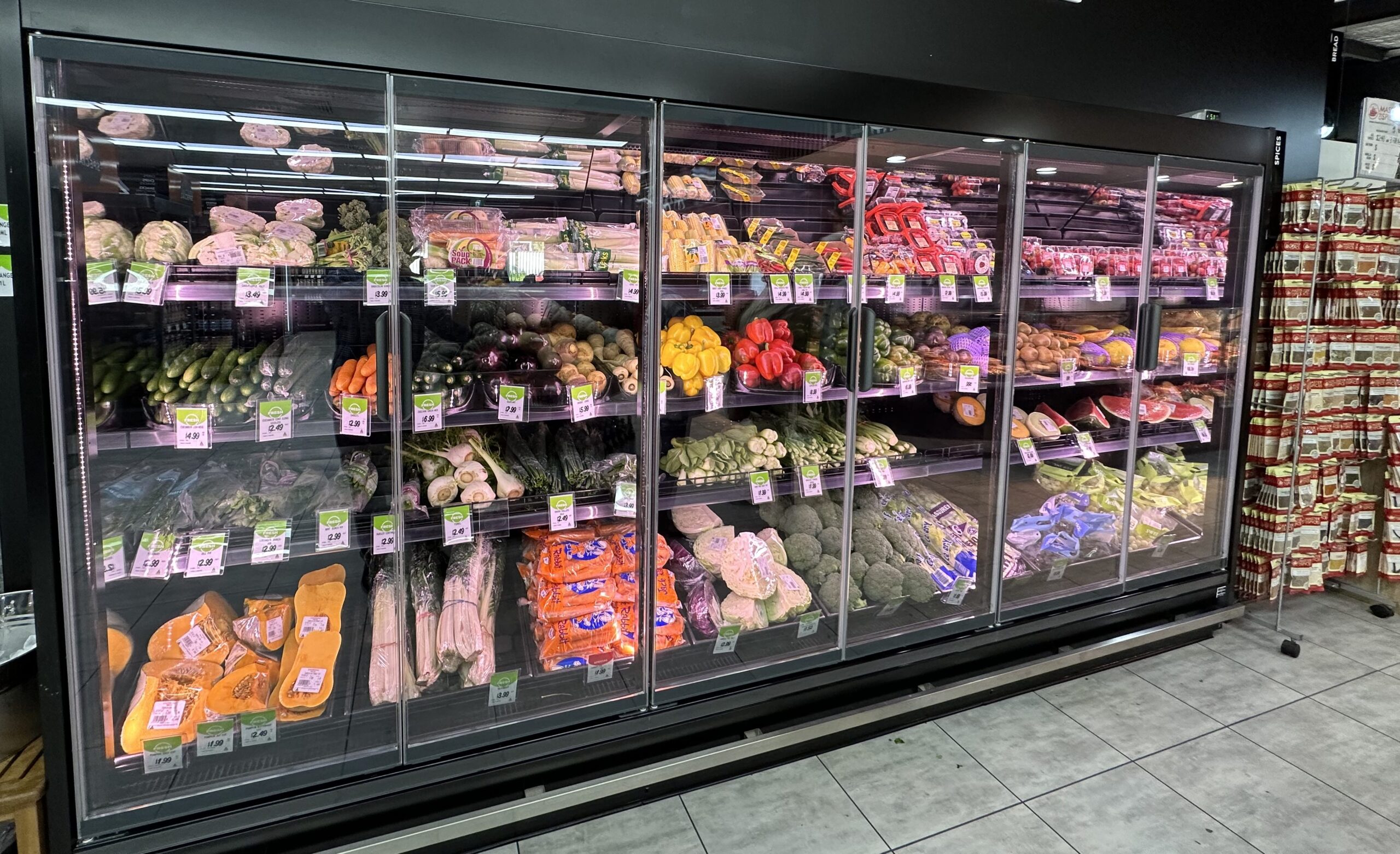
In retail environments such as refrigerated display systems, understanding these differences is essential for controlling shelf life, appearance, and nutritional quality.
- Understanding Photooxidation in Food Systems
Photooxidation occurs when light energy activates chemical reactions in food molecules, especially fats, proteins, and pigments. This process accelerates spoilage and quality loss even under refrigeration.
In many cases, light induced food degradation begins at the surface and gradually affects the entire product over time. The speed and severity depend on the food’s composition and exposure conditions. - Dairy Products and Fat-Sensitive Oxidation
Dairy products are particularly vulnerable because they contain high levels of fat and sensitive proteins. Light exposure triggers breakdown of these components, leading to flavor and odor changes.
A key mechanism here is lipid oxidation food display, where fats react with oxygen under light exposure, producing off-flavors commonly described as rancid or stale.
Dairy also experiences:- Protein structural changes
- Vitamin degradation, especially riboflavin
- Color shifts in milk and cream products
These reactions are often accelerated in transparent packaging under strong retail lighting.
- Meat Products and Protein Degradation Reactions
Meat behaves differently because it contains both heme pigments and protein structures that are highly reactive to light.
One major issue is protein degradation light exposure, where muscle proteins break down under photochemical stress, affecting texture and water retention.
Another key process is:- Oxidation of myoglobin, causing discoloration
- Loss of red freshness appearance
- Development of off-odors in prolonged exposure
In retail environments using food display case lighting, improper spectral design can significantly speed up these reactions.
- Seafood and Highly Reactive Lipid Structures
Seafood is the most sensitive category due to its high unsaturated fat content and delicate protein structure. These compounds are extremely reactive under light exposure.
Seafood degradation is strongly linked to light sensitive food compounds, which break down rapidly when exposed to visible and ultraviolet wavelengths.
Common effects include:Rapid lipid breakdown producing strong odors
Texture softening due to protein breakdown
Loss of natural color and gloss
This makes seafood one of the most vulnerable categories in refrigerated retail displays.
Role of Food Photochemical Reactions Across Categories
All three categories—dairy, meat, and seafood—undergo food photochemical reactions, but the intensity and pathway differ.Dairy: primarily lipid and vitamin degradation
Meat: pigment oxidation and protein changes
Seafood: rapid lipid and amino acid breakdown
These reactions are influenced by both light intensity and wavelength exposure, making lighting control critical in retail environments.
Spectral Influence and Retail Lighting Impact
Light does not affect all foods equally because different wavelengths trigger different reactions.
In retail systems, spectral power distribution LED plays a major role in determining how much damage occurs over time. Blue-rich light tends to accelerate oxidation processes in all three categories.
This is why modern systems focus on food safe lighting spectrum, which reduces harmful wavelengths while maintaining product visibility.Measuring Light Exposure and Food Stability
Controlling degradation requires understanding how long and how intensely food is exposed to light.
light exposure measurement food helps retailers quantify exposure levels and identify risk zones within refrigerated displays.
Combined with monitoring food lighting performance metrics, this allows optimization of lighting conditions to slow down degradation processes across different food categories.Comparing Stability Across Dairy, Meat, and Seafood
Each category responds differently due to its composition:Dairy: moderately sensitive, mainly fat-driven oxidation
Meat: pigment-driven visual and structural changes
Seafood: extremely high sensitivity with rapid breakdown
This variation explains why light exposure shelf life differs significantly across product categories even under identical storage conditions.
Improving Shelf Life Through Lighting Control
Retailers can significantly reduce degradation by optimizing lighting systems and exposure duration. Advanced solutions focus on minimizing harmful wavelengths and balancing visibility with preservation.
extend shelf life retail lighting strategies are increasingly used to maintain freshness while still enhancing product appeal.
Proper design also supports food quality preservation lighting, which reduces waste and improves customer perception of freshness.
Conclusion
Photooxidation behaves differently across dairy, meat, and seafood because each category has unique chemical structures and sensitivity to light. Dairy mainly suffers from lipid oxidation, meat from pigment and protein breakdown, and seafood from rapid lipid degradation.
Understanding photooxidation in food and controlling light induced food degradation through proper lighting design is essential for preserving quality and extending shelf life in modern retail environments.
For More Information
For more insights on advanced food lighting systems and retail preservation technologies, visit www.foodlighting.com The platform offers scientific lighting solutions designed to reduce photooxidation, improve food stability, and enhance refrigerated display performance.