
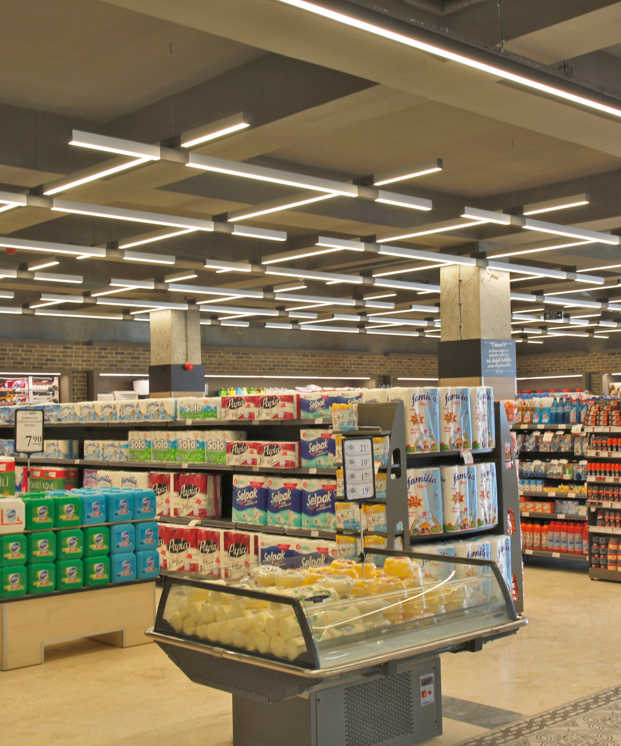
How color accuracy impacts brand perception, and what lighting specs help packaging look true
In today’s competitive grocery environment, visual presentation is just as important as product quality. Packaged foods rely heavily on label design, color, and imagery to communicate freshness, flavor, and brand identity. When lighting in refrigerated or ambient display cases alters the appearance of packaging, customers can perceive products as old, faded, or less appealing. Even small inconsistencies in color reproduction can reduce trust, lead to hesitation at the point of sale, and ultimately affect sales.
Retailers often focus on temperature and shelf placement but overlook how lighting interacts with packaging. Understanding how to select, place, and maintain food-safe lighting is critical for protecting brand integrity while keeping products attractive in-store.
Why Label Appearance Matters
Packaging serves as the first point of contact between shoppers and the product. Customers subconsciously judge quality based on:
- Color fidelity:True-to-design hues signal freshness and professionalism.
- Clarity of text and imagery:Well-lit labels ensure ingredients, nutritional information, and promotions are easily readable.
- Overall visual appeal:Vibrant, consistent packaging encourages purchase, while dull or distorted labels raise doubt.
Labels that appear “off” can cause confusion and even reduce repeat purchases. Inconsistent visual cues may make a shopper question the product’s quality, freshness, or authenticity, impacting both immediate sales and long-term brand loyalty.
How Lighting Can Distort Packaging Colors
Several factors in display cases can affect how labels look:
- Improper Light Spectrum
- Standard commercial LEDs may emit wavelengths that shift perceived colors on printed packaging.
- Red, blue, or yellow tones can appear washed out or oversaturated, altering the intended brand design.
- Overexposure or Hotspots
- Bright, concentrated lighting can create glare, obscure text, and distort color perception.
- Packaging at different heights or corners may receive uneven lighting, creating visual inconsistencies across shelves.
Heat and Temperature Fluctuations
- Lighting that generates heat can slightly warp packaging, especially thin cardboard or shrink-wrap.
- Temperature variations in open cases may further change label appearance over time, affecting color and clarity.
These combined effects compromise customer trust and can increase returns or complaints.
Selecting Food-Safe Lighting for Packaged Foods
Using food-focused lighting, such as balanced-spectrum LEDs, addresses these challenges. Key considerations include:
- Accurate Color Rendering
- Choose lights designed to reproduce colors faithfully, ensuring packaging appears as intended by the brand.
- A high CPI rating ensures consistent color reproduction across all product types and positions in the case.
- Reduced Heat Emission
- Low-heat LEDs protect packaging integrity and prevent distortion or fading caused by thermal stress.
- They also reduce stress on refrigeration, supporting temperature stability and extending shelf life.
- Even Illumination Across Shelves
- Ensure light distribution reaches every product evenly, from top shelves to bottom trays.
- Avoid hotspots or shadows that create uneven color presentation, which may make certain products look less appealing.
Investing in food-safe lighting ensures that products remain visually consistent and trustworthy to shoppers.
Strategic Placement of Case Lighting
Placement is as important as the lighting type itself:
- Top and Front Fixtures
- Illuminate packaging surfaces without creating reflections that obscure labels.
- Highlight the design details, logos, and ingredient information that customers rely on to make purchasing decisions.
- Diffusers and Angled Lighting
- Reduce glare and soften illumination to create uniform visibility across all products.
- Angled fixtures can prevent light from shining directly into customer sightlines while maintaining clarity.
Proper positioning ensures that the visual integrity of packaged foods is preserved across the entire display.
Operational Best Practices for Retailers
Even with the right lighting, daily handling impacts packaging perception:
- Rotation and front-facing products:Keep labels facing forward to maximize readability and brand impact.
- Regular inspection:Check for color changes caused by lighting, temperature, or humidity fluctuations.
- Clean case surfaces:Smudges, condensation, and dust can distort light and make packaging look off-color.
- Monitor performance:Track customer feedback and sales trends to identify packaging issues that may be lighting-related.
Consistency in handling complements technical solutions and protects customer trust.
Benefits of Proper Case Lighting
Implementing accurate and food-safe lighting for packaged foods provides measurable advantages:
- Enhanced brand perception: Customers see packaging as the manufacturer intended, reinforcing trust and loyalty.
- Reduced shrink: Minimizing color distortion reduces returns, complaints, and unnecessary product rotation.
- Operational efficiency: Staff spend less time correcting visual issues or replacing packages.
- Energy efficiency: Modern LEDs provide bright, consistent light without increasing case temperature or energy consumption.
A well-lit display contributes to both sales and operational performance.
Checklist for Packaged Food Case Lighting
Before finalizing lighting solutions, retailers should ensure:
- Balanced-spectrum LEDs with high CPI for accurate color reproduction
- Low-heat operation to protect packaging integrity
- Uniform illumination across all shelves and depths
- Strategic placement to prevent glare and reflections
- Integration with existing refrigeration and case airflow
- Staff protocols for rotation, inspection, and cleaning
Meeting these criteria ensures packaged foods look true-to-brand and encourages confident purchases.
Conclusion
Packaged foods rely on visual appeal to communicate quality, freshness, and brand identity. Improper case lighting can distort colors, obscure labels, and create customer doubt. Retailers who invest in food-safe, balanced-spectrum lighting and strategically manage placement and case conditions protect both the product and brand perception.
Proper lighting reduces returns, improves shopper trust, and supports overall operational efficiency while maintaining the intended presentation of every package.
For expert lighting solutions that protect the integrity of packaged foods and maintain visual consistency across your store, visit www.foodlighting.com and explore professional display lighting designed for modern grocery environments.