
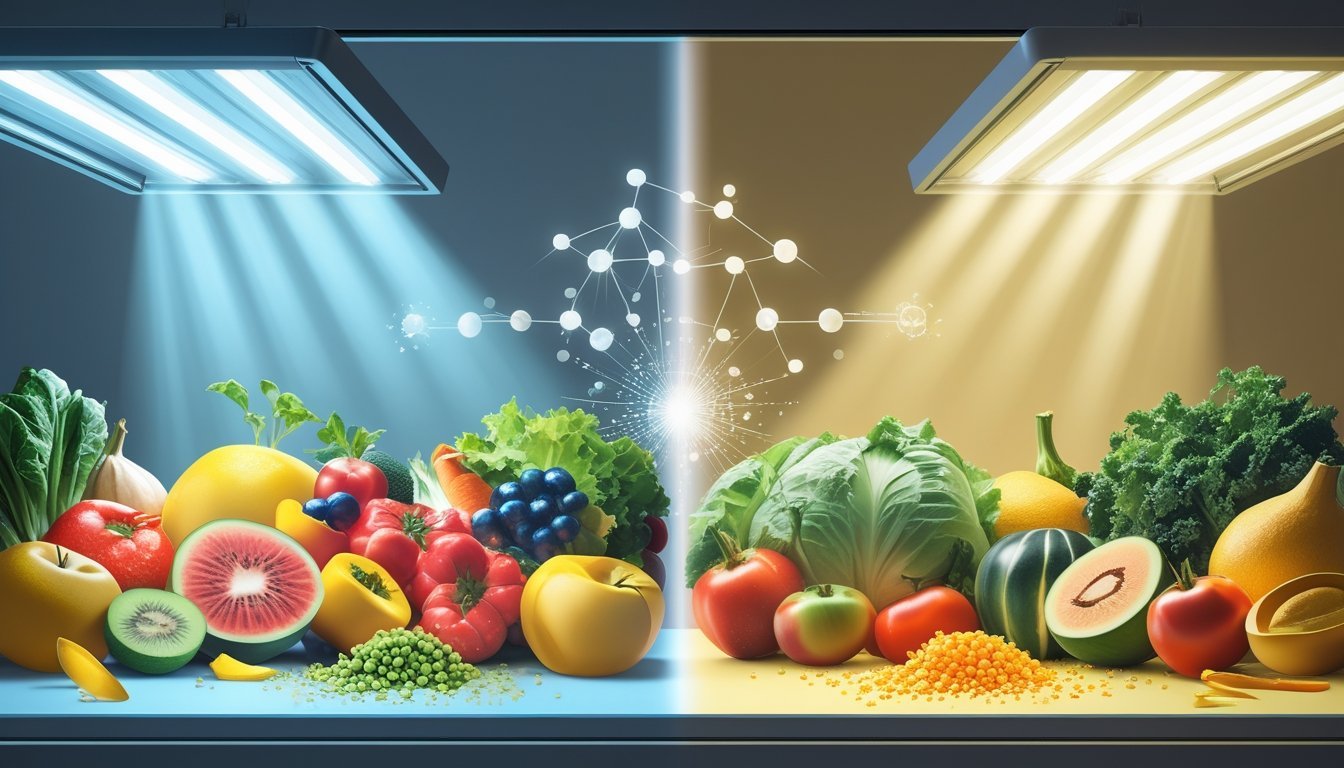
In modern retail environments, food quality is influenced not only by temperature and handling but also by lighting conditions. One of the most overlooked factors is how long food is exposed to light rather than how strong that light is. This is especially critical in light exposure shelf life, where even moderate lighting over long periods can significantly degrade food quality.
Retailers often focus on brightness levels, but scientific evidence shows that exposure time plays a far greater role in chemical breakdown processes affecting food stability.
1. Understanding Time vs Intensity in Food Light Damage
Light affects food through cumulative energy exposure. While intensity measures how strong the light is at a given moment, duration determines how long food molecules are continuously exposed to that energy.
In many cases, food degradation from light exposure occurs slowly over time rather than instantly under strong light. This means even low-intensity lighting in a refrigerated environment can cause significant damage if products remain exposed for long durations.
This shift in understanding is crucial for designing better food display strategies in retail spaces.
2. How Photochemical Reactions Accumulate Over Time
Food does not degrade instantly under light; instead, it undergoes gradual chemical changes known as photochemical reactions. These reactions accumulate energy over time, eventually breaking down fats, proteins, and pigments.
This process is part of food photochemical reactions, where continuous exposure leads to irreversible molecular changes.
In a food display case lighting environment, even stable LED systems can contribute to degradation if products are exposed for extended periods without rotation or shielding.
3. Why Duration Amplifies Lipid and Protein Breakdown
Lipids and proteins are highly sensitive to continuous light exposure. Over time, prolonged exposure leads to oxidation and structural breakdown.
This is where lipid oxidation food display becomes a major concern. The longer fats are exposed to light, the more free radicals are generated, accelerating rancidity.
Similarly, protein degradation light exposure occurs when amino acid structures are broken down over extended lighting periods, affecting texture, flavor, and nutritional value.
Even if light intensity remains constant, time alone can drive significant quality loss.
4. Role of Light Dose in Food Quality Decline
Food scientists often use the concept of total light dose, which combines intensity and duration. However, in retail environments, duration often dominates the equation.
light dose food degradation explains that cumulative exposure over hours or days causes more damage than short bursts of strong light.
For example:
- Short exposure: minimal effect
- Long exposure: gradual but irreversible quality loss
This is particularly important in refrigerated retail systems where products remain on display for long operating hours.
5. Spectral Sensitivity and Continuous Exposure Risk
Different foods react differently to light depending on their composition. Some pigments, fats, and nutrients are more sensitive to prolonged exposure.
This is known as spectral sensitivity food products, where specific wavelengths trigger stronger degradation reactions over time.
In a food display case lighting setup, even optimized LEDs can cause damage if exposure duration is not controlled through rotation or shielding strategies.
6. Light-Induced Oxidation Over Extended Display Time
Oxidation is not an instant reaction—it builds up gradually. The longer food remains under lighting, the more oxygen interactions occur.
This contributes to oxidative stress in food, where reactive oxygen species accumulate and break down essential food structures.
In retail environments, extended display durations are often unavoidable, making time management a critical factor in maintaining food quality.
7. Impact on Shelf Life in Retail Environments
Shelf life is directly influenced by total exposure time. Even if lighting is low and temperature is controlled, prolonged exposure still reduces product stability.
This is why extend shelf life retail lighting strategies focus not just on light quality but also on limiting exposure duration through better merchandising rotation and display design.
Products that remain under continuous light lose freshness faster, even in ideal refrigeration conditions.
8. Improving Retail Lighting Strategies for Time Control
Modern retail systems are increasingly focusing on exposure management rather than just brightness control. This includes:
- Rotating stock more frequently
- Reducing unnecessary lighting hours
- Designing targeted illumination zones
- Using sensors for display timing
These strategies improve supermarket lighting optimization by minimizing total exposure time rather than simply lowering intensity.
9. Food Quality Protection Through Controlled Exposure
The ultimate goal of lighting design is not just visibility but preservation. Proper systems focus on reducing cumulative exposure rather than only adjusting brightness levels.
food quality protection systems help ensure that products are exposed to light only when necessary, reducing long-term degradation risks and improving overall freshness.
Conclusion
Light-induced food degradation is not driven solely by brightness but by how long food is exposed. Extended exposure increases chemical reactions, accelerates oxidation, and reduces shelf life even under low-intensity lighting conditions.
Understanding light exposure shelf life and controlling food degradation from light exposure allows retailers to design smarter lighting systems that protect food quality while maintaining strong visual appeal.
For More Information
For more insights on optimizing food lighting systems and improving retail preservation strategies, visit https://www.foodlighting.com. The platform provides advanced lighting solutions designed to enhance food safety, reduce degradation, and improve display performance in modern retail environments.
For More Information
For more insights on optimizing food lighting systems and improving retail food preservation, visit www.foodlighting.com The platform provides advanced scientific lighting solutions designed to enhance food safety, extend shelf life, and improve retail display performance.