
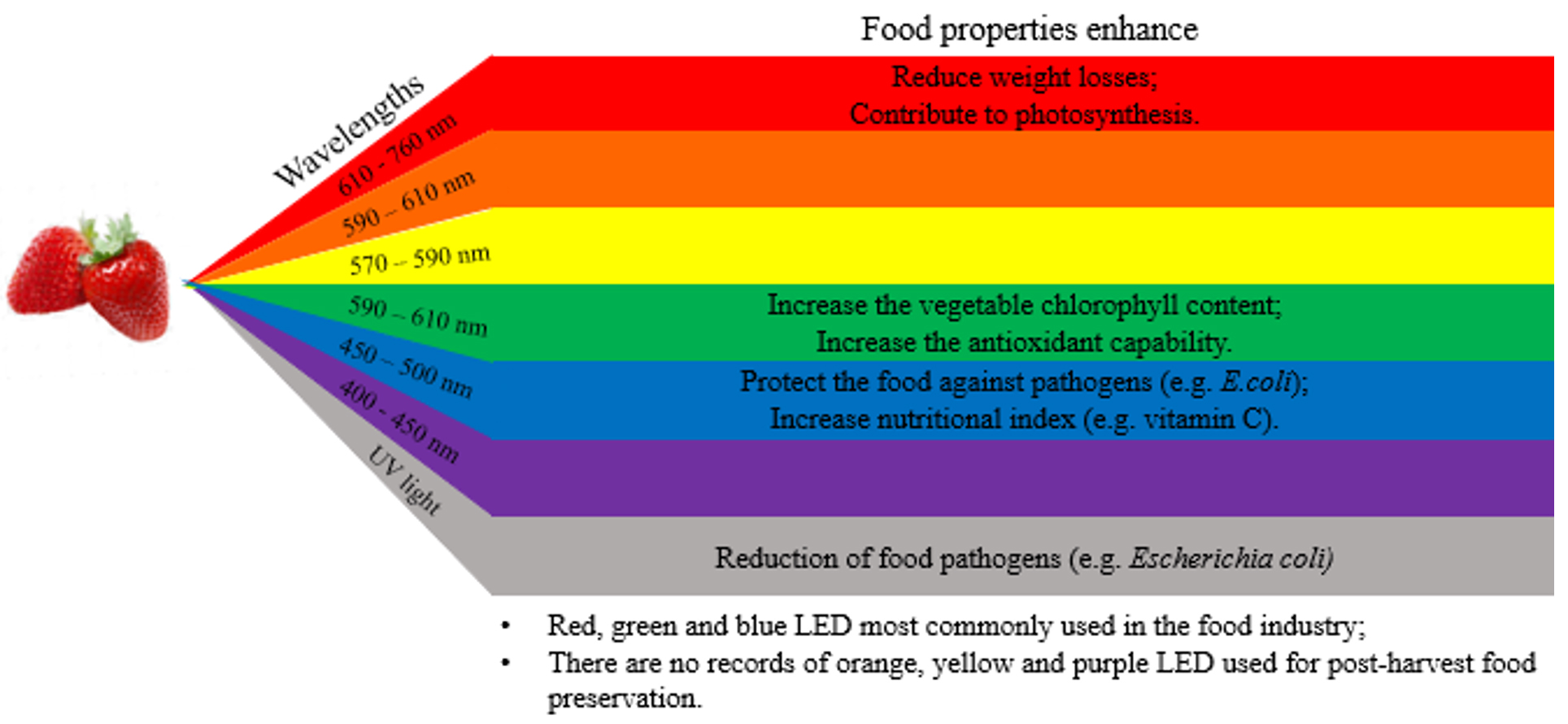
Food products do not respond to lighting in a uniform way. Some items fade quickly, others lose nutrients, and some develop off-colors or oxidative changes even under normal retail lighting. The reason lies in spectral sensitivity food products, where different pigments and compounds react uniquely to specific wavelengths of light.
Understanding these reactions is essential for designing safer retail lighting systems that protect food quality while still ensuring attractive product presentation.
- What Spectral Sensitivity Means in Food Systems
Spectral sensitivity refers to how food compounds respond to different wavelengths of light. Each pigment or nutrient absorbs and reacts differently depending on the light spectrum it is exposed to.
In retail environments, this becomes critical because light sensitive food compounds determine how fast a product will degrade under display lighting conditions.
For example:- Chlorophyll in vegetables reacts strongly to blue light
- Carotenoids in fruits degrade under prolonged exposure
- Lipids in dairy products are sensitive to specific visible wavelengths
These differences explain why some foods lose quality faster than others under identical lighting.
- Role of Wavelength in Food Reactions
Light is not a single entity; it is composed of multiple wavelengths, each carrying different energy levels. Shorter wavelengths carry higher energy and are more reactive with food molecules.
This is where wavelength impact on food becomes scientifically important. High-energy wavelengths can trigger chemical reactions that break down pigments, fats, and proteins.
In a food display case lighting environment, improper wavelength distribution can accelerate degradation even if overall brightness appears safe. - Photochemical Reactions and Pigment Breakdown
When food is exposed to light, it undergoes photochemical reactions that alter its structure and appearance.
This process is known as food photochemical reactions, where photons interact with food molecules, initiating breakdown processes.
Common effects include:- Color fading in fruits and vegetables
- Loss of freshness appearance in meats
- Nutrient degradation in packaged foods
These reactions are slow but cumulative, meaning longer exposure leads to greater damage.
- Light-Induced Degradation of Food Quality
Over time, continuous exposure leads to visible and chemical deterioration. This is known as light induced food degradation, where both surface appearance and internal quality are affected.
In retail environments, this is especially visible in refrigerated displays where products remain under constant lighting for long hours.
A major concern is food degradation from light exposure, which affects both consumer perception and actual nutritional value. - Oxidative Stress in Sensitive Food Products
Certain foods, especially those high in fats and pigments, undergo oxidative changes when exposed to light.
This process is called oxidative stress in food, where reactive oxygen species break down essential nutrients and structural components.
Examples include:- Dairy products developing off-flavors
- Meat losing color stability
- Oils becoming rancid faster
Even controlled refrigeration does not fully prevent these reactions if lighting is not optimized.
- Spectral Power Distribution and Retail Lighting Impact
Modern LED systems are designed with specific spectral outputs, but not all are suitable for food environments.
spectral power distribution LED defines how much energy is emitted across different wavelengths. If the spectrum is heavy in blue light, food degradation accelerates.
This is why food safe lighting spectrum design is critical in retail spaces. It ensures that harmful wavelengths are minimized while maintaining visibility and product appeal. - Measuring Light Exposure in Food Environments
To control degradation, retailers must measure how much light food is receiving over time and intensity.
light exposure measurement food helps quantify total exposure and identify risk zones in display systems.
When combined with monitoring tools, retailers can adjust food lighting performance metrics to reduce unnecessary exposure and improve product stability. - Why Different Foods React Differently
The variation in food response comes from differences in chemical composition. Pigments, fats, proteins, and nutrients all absorb light differently.
This is why spectral sensitivity food products is not uniform across categories. For example:- Leafy greens are highly sensitive to blue wavelengths
- Dairy products are sensitive to UV and visible light
- Processed foods vary depending on additives and fat content
Understanding these differences allows for better lighting customization in retail systems.
- Improving Food Protection Through Lighting Design
Modern retail lighting systems are evolving to protect food rather than simply illuminate it. This includes designing targeted spectral outputs that minimize harmful reactions.
food quality preservation lighting focuses on reducing degradation while maintaining visual appeal. It helps extend shelf life, preserve nutrients, and improve product presentation in refrigerated environments.
When properly implemented, it also enhances refrigerated display lighting efficiency by balancing visibility and preservation needs.
Conclusion
Food pigments react differently to light because of their unique spectral sensitivity and chemical composition. These variations explain why some products degrade faster under identical conditions.
By understanding spectral sensitivity food products and controlling light sensitive food compounds, retailers can significantly reduce degradation, improve freshness, and extend shelf life across all food categories.
For More Information
For more insights on advanced food lighting systems and scientific retail display solutions, visit www.foodlighting.com The platform provides specialized lighting technologies designed to reduce food degradation, enhance product preservation, and improve retail display performance.